Get your equipment ready before the first storm
By Spellman Trailers • Snowplows & winter equipment
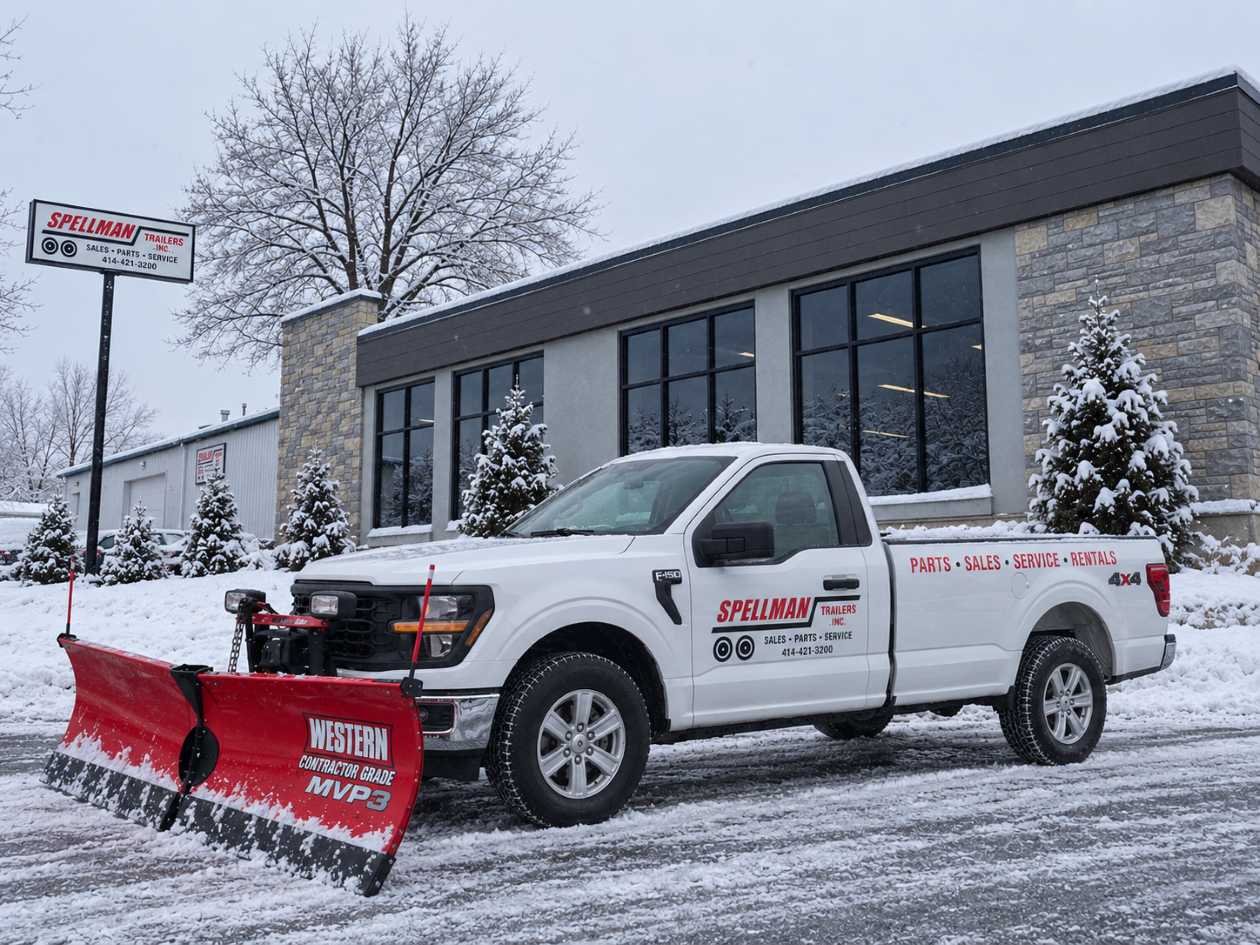
The first snowfall is a tough time to discover a leaking hose or a plow that won’t move. Even if everything worked last spring, a preseason inspection can help you catch problems before you need your equipment.
Check the blade, cutting edge and shoes for excessive wear, cracks or damage. Inspect mounting points, welds, pins and fasteners for missing hardware, looseness or cracks. Look over trip springs and pivot points for damage or binding. Follow your model’s maintenance and adjustment instructions, and replace worn components before they cause additional damage.
Inspect hoses for cracks, rubbing and leaks. Check cylinders for leakage and damaged rods. Service the hydraulic fluid according to your owner’s manual, using the specified fluid. WESTERN recommends changing the hydraulic fluid once a year. At Spellman Trailers, we recommend doing this in the fall before the plowing season starts. Inspect wiring, plugs and connectors for corrosion, loose connections or damaged insulation. Clean and protect connections as directed, and check the truck’s battery and charging system.
Storage doesn’t guarantee everything stayed ready. Look for rust on exposed metal, corrosion inside connectors, deteriorated rubber and evidence of rodents chewing wiring or nesting around equipment.
In a clear area, with everyone safely away from the equipment:
Complete another function check after servicing.
Ask about model-specific spares, including hydraulic hoses, mounting pins and clips, and compatible replacement bulbs where applicable. Keep the manufacturer-specified hydraulic fluid and recommended grease available. Check your cutting edge early so you have time to order a replacement if needed.
When requesting parts, provide the plow’s brand, model, blade size and serial number if available. Photos of the entire plow, identification labels, connectors and damaged part can help. For truck-side components, include the truck’s year, make and model. On older WESTERN® equipment, plug count and connector pin count can also help identify the system.
Test it now, not during the storm.
Inspect the cutting edge, shoes, springs and pivots.
Check mounting points, pins, clips and fasteners.
Inspect hoses, cylinders and the specified fluid.
Check wiring, connectors, battery and lighting.
Test all movements your model provides.
Stock compatible parts, fluid and grease.
Follow your owner's manual.
Lower the blade before inspection.
Note whether the controller powers on, whether you hear the motor and which functions fail. Electrical, hydraulic and mechanical problems can produce similar symptoms, so those details are more useful than guessing which part needs replacement.
Lower the blade before inspection and follow your owner’s manual. Never work beneath an unsupported raised plow, use your hands to locate a pressurized hydraulic leak, or disassemble spring-loaded trip components without the proper procedure and support.
5921 W. Ryan Rd.
Franklin, WI 53132
Phone: (414) 421-3200
Toll Free: 1 (800) 592-0955
Fax: (414) 421-1231